
HedgeIOT: Building a Reproducible JupyterHub/JupyterLab Platform
On HedgeIOT, I was responsible for making the development environment reliable for multiple users, not just for one local setup.
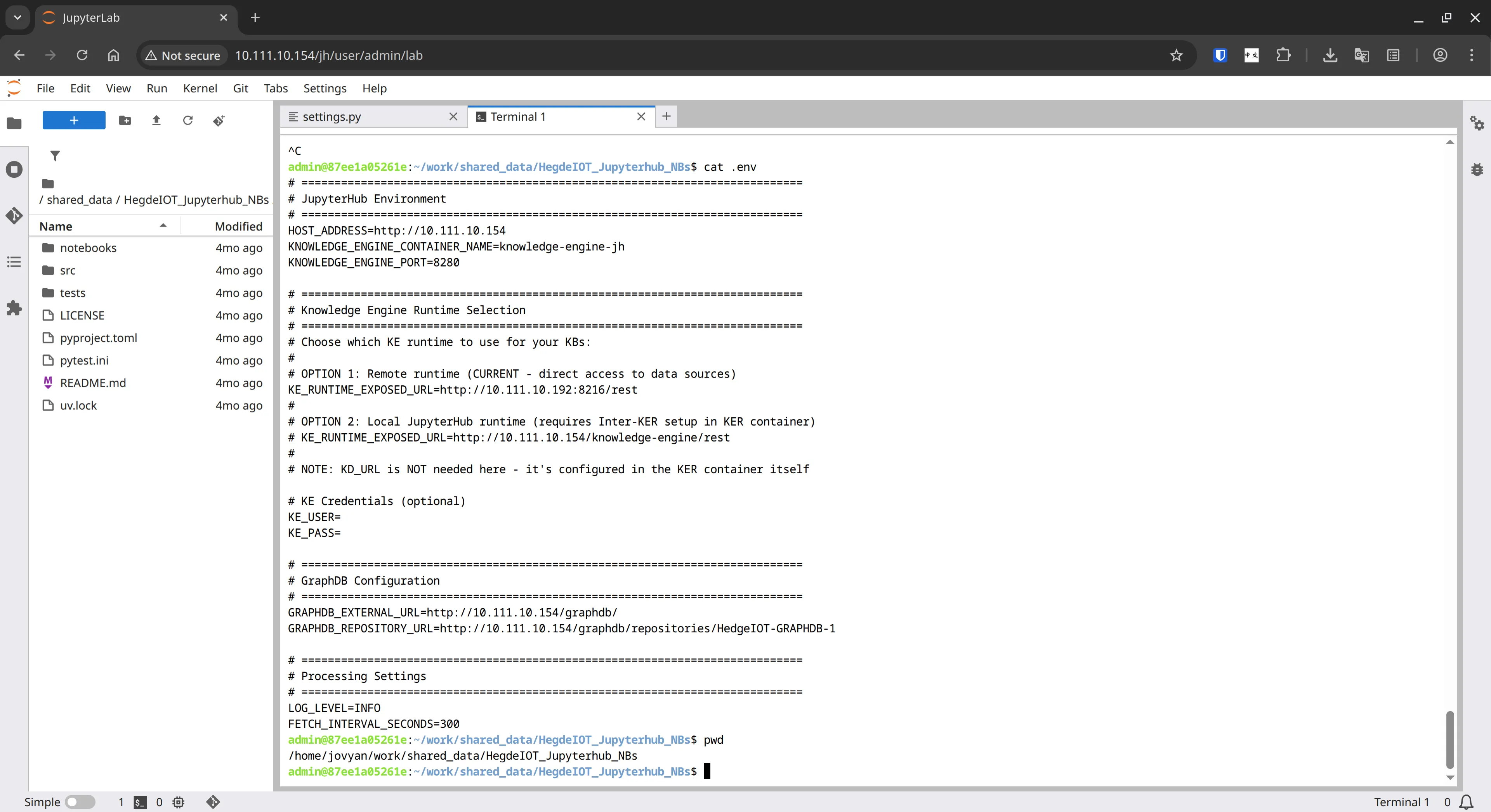
The goal was simple: anyone on the team should be able to log in and start working in the same environment without dependency drift or manual setup.
Project Scope
Repo: https://github.com/VU-HedgeIOT/HedgeIOT_Jupyterhub_env
I delivered a JupyterHub/JupyterLab deployment focused on reproducibility and team-scale usability:
- Multi-user container spawning with DockerSpawner
- Persistent per-user
/workdirectories - Shared read-only
/shared_datamount for datasets and example notebooks - Admin-focused containers with extra tooling and optional SSH remote development

What I Built
1) Multi-user runtime that stays consistent
Each user gets an isolated container, but the environment definition is shared and repeatable. This reduced onboarding friction and removed “works on my machine” issues.
2) Storage model for daily work and collaboration
I separated personal and shared storage clearly:
/workfor each user’s persistent workspace/shared_datafor common assets that should remain stable and read-only
This helped avoid accidental data mutation while keeping collaboration practical.
3) Operational tooling for maintainers
For debugging and maintenance, I added admin-capable containers with extra tools and optional remote access pathways.
Technical Challenges I Solved
- Standardized environment bootstrapping for all users
- Balanced isolation with shared resources
- Designed mounts/permissions to prevent accidental dataset changes
- Enabled smoother troubleshooting for deployment maintainers
Outcome
The team could onboard faster, run notebooks in a consistent environment, and focus on HedgeIOT logic instead of local setup issues.
For me, this project demonstrates practical MLOps/platform engineering experience: container orchestration, reproducibility, user isolation, and operational maintainability.